
Soft Switching – The Quiet Deposit Drain That Doesn’t Show Up in Your Attrition Report
AI Insights for Credit Union & Community Bank Leaders
Join the monthly newsletter for all the latest industry updates
No spam. Unsubscribe anytime.
Members and customers aren’t leaving. They’re just… spreading out.
It’s a pattern that doesn’t show up in attrition reports, doesn’t trigger a churn alert, and doesn’t prompt an exit interview. But it’s costing credit unions and community banks deposits, engagement, and ultimately the primary financial relationship they’ve spent years building.
It’s often referred to as “soft switching”, and in J.D Power’s 2026 U.S. Credit Union Satisfaction Study, it is shown to be accelerating.
What soft switching actually looks like
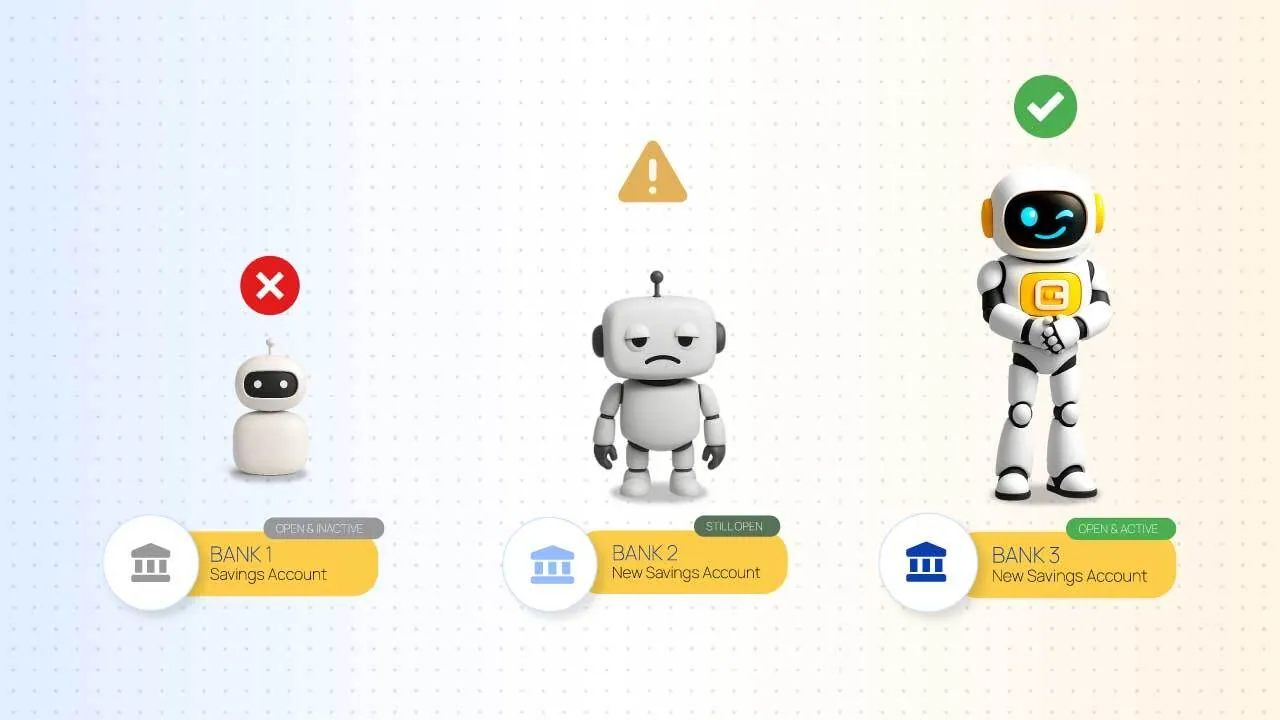
Soft switching isn’t when a customer closes their account. It’s when they open a second or third account somewhere else – a high-yield savings at a digital bank, a checking account at a national bank with a better app – and gradually shift more of their financial activity there.
They stay on the books. But over time, the credit union or community bank goes from primary financial institution to secondary. Then to backup. Then to habit.
The 2026 J.D. Power data puts numbers to the problem: more than half of credit union members now hold checking accounts (59%) and savings accounts (56%) at other financial institutions. Member satisfaction has dropped 4 points year-over-year to 725 out of 1,000. And the share of members who say they “definitely will” continue using their credit union has fallen to 71% – down 2 points from last year.
The same competitive pressure applies to community banks. J.D. Power’s 2026 retail banking data found that 20% of bank customers are actively soft switching, and U.S. banking switching behavior has hit a 10-year high, with 1 in 4 households actively considering changing their primary financial institution.
None of those numbers are alarmist on their own. Together, they describe a slow bleed.
Why it’s happening now
A few forces are converging.
Digital-first banks and fintechs have made it nearly frictionless to open a second account. No branch visit, no paperwork, no waiting. A customer who’s mildly frustrated with a long hold time or a clunky app experience can have a new account with a competitor set up in under five minutes.
At the same time, expectations have changed. People are used to instant, personalized digital experiences everywhere else in their lives. When their credit union or community bank can’t match that – whether it’s a slow chat response, an IVR that doesn’t understand their question, or a loan application that requires a branch visit — they don’t complain. They quietly go elsewhere for that need.
And here’s the data point that should get every financial institution leader’s attention: PYMNTS Intelligence found a 122% surge in demand for AI chat support among consumers who recently left a credit union. These aren’t customers who left because they wanted a robot. They left in part because the institution they trusted couldn’t deliver the speed and accessibility they needed.
Where AI fits in
Credit unions and community banks deploying agentic AI in their contact centers are starting to close the experience gap that drives soft switching.
The most direct impact is on availability and resolution. A customer who calls at 9pm with a question about a loan payment shouldn’t hit a dead end – they should get an answer. Someone who starts a chat about a lost card should be able to resolve it without waiting in a queue. When AI handles these interactions instantly and accurately, it removes the micro-frustrations that quietly erode trust over time.
But the more strategic opportunity is in proactive engagement. Agentic AI that has access to customer data can surface the right outreach at the right moment – a savings rate reminder when a high-yield competitor is advertising heavily, a loan offer when transaction patterns suggest a large purchase is coming, a check-in after a service issue to confirm it was resolved. This is the kind of personalization that keeps your institution top-of-mind before a customer decides to open an account somewhere else.
SecurityPlus Federal Credit Union deployed Voice AI with interface.ai and saw 84%+ call automation alongside 6% membership growth. That’s not a coincidence – when customers consistently get fast, effective service, they don’t need to look elsewhere.
Wrap up
If you’re seeing early signs of soft switching in your data – or you want to build the engagement model that prevents it – talk to the interface.ai team. We work with credit unions and community banks to deploy agentic AI across the banking experience to keep members and customers engaged and drive long-term primary institution retention.
Kate Rogerson
AI Insights for Credit Union & Community Bank Leaders
Join the monthly newsletter for all the latest industry updates
No spam. Unsubscribe anytime.
You might also like

Agentic AI for Credit Unions and Banks – The Questions You Should be Asking
“Agentic AI” is the most-pitched phrase in banking technology right now. Every vendor claims it, few define it the same way, and the demos all look impressive. For the leaders actually signing the…
Kate Rogerson July 24, 2026Agentic AI
Members Don’t Hate Automation. They Hate Bad Automation
There’s a stat that gets used to argue members will never accept AI: 80% of consumers who use a banking chatbot walk away more frustrated than when they started. Nearly the same share…
Kate Rogerson July 16, 2026Agentic AIAI Insights for Credit Union & Community Bank Leaders
Join the monthly newsletter for all the latest industry updates
No spam. Unsubscribe anytime.